Circuit City: Three Sequences on Video Art in New York, 1970s–1990s
Sequence III
Sequence III: Crisis City: Media, Protest, Counter-Publics
28.03.2026 – 19.04.2026
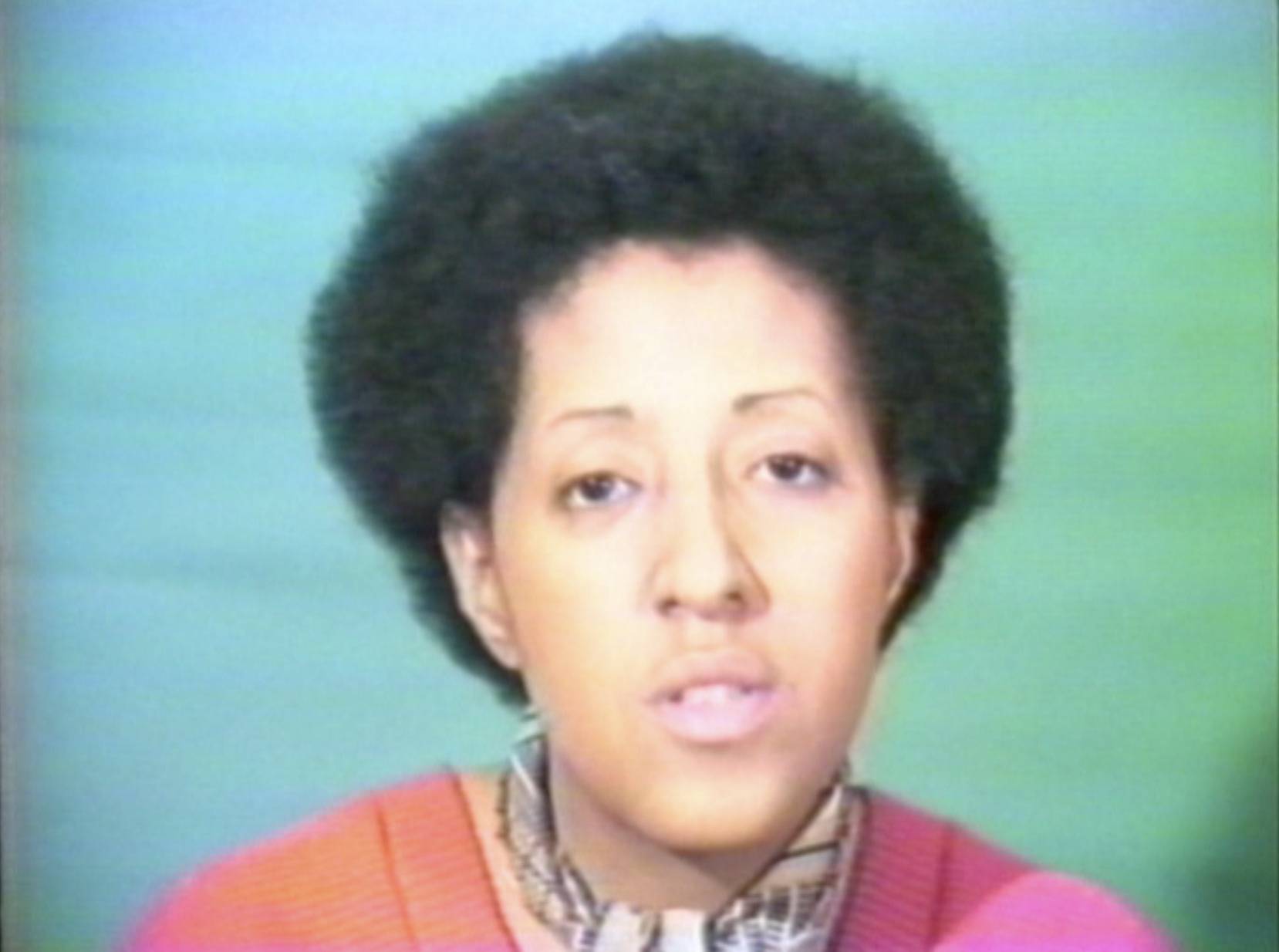
Howardena Pindell, “Free, White, and 21”, 1980; 12:15 Min.
Sequence III: Crisis City: Media, Protest, Counter-Publics
28.03.2026 – 19.04.2026
This three-part video and film program, curated by Elisa R. Linn and Lennart Wolff, brings together moving-image works produced in New York from the 1970s through the early 1990s. Taking its title from Julia Heyward’s collaborative video work “Circuit City,” with music by John Paul Jones and background animations by Ericka Beckman, the program reflects the artistic and political milieu that shaped Heyward’s practice, situating it within a broader landscape of experimental video and performance.
Overlapping crises, including the AIDS epidemic, renewed Cold War tensions, U.S. intervention in Latin America, and the conservative backlash of the Reagan era shaped the United States of the 1980s and early 1990s. In response, artists turned to video as an urgent medium capable of rapid circulation, political critique, and the dissemination of information suppressed or ignored by mainstream media. Challenging narratives that frame the period as depoliticized or consumer-driven, video art functioned largely outside established broadcast systems, creating alternative channels of communication and counter-public spheres that confronted state power and aligned closely with activist movements such as ACT UP. At the same time, exhibitions like “Homo Video: Where Are We Now? A Program of Videotapes by Gay Men and Lesbians,” presented at the New Museum in New York in 1986 and curated by William Olander, marked the further canonization of video, around which new forums, festivals, and cultural institutions began to form. Within this changing urban and media landscape, the works in Sequence III approach the city as a site of crisis and confrontation—shaped by protest, surveillance, and mediated spectacle—but also as a space of self-organization and alternative public life. Through appropriation, performance, and direct address, they mobilize video to contest racialized, gendered, and sexualized forms of exclusion, positioning the medium as both a political instrument and a communal plat- form to imagine new forms of public life.
1. Howardena Pindell, “Free, White, and 21,” 1980; 12:15 Min.
2. Paper Tiger Television, “Nolan Bowie on High Tech Snooping: the Government Shares the Deadbeat Dad List,” 1984; 28:00 Min.
3. Dara Birnbaum, “Damnation of Faust: Charming Landscape,” 1987; 10:02 Min.
4. Tom Rubnitz, “Strawberry Shortcut,” 1989; 1:30 min / “Listen to This” (with David Wojnarowicz), 1992 / 1995; 15:00 Min.